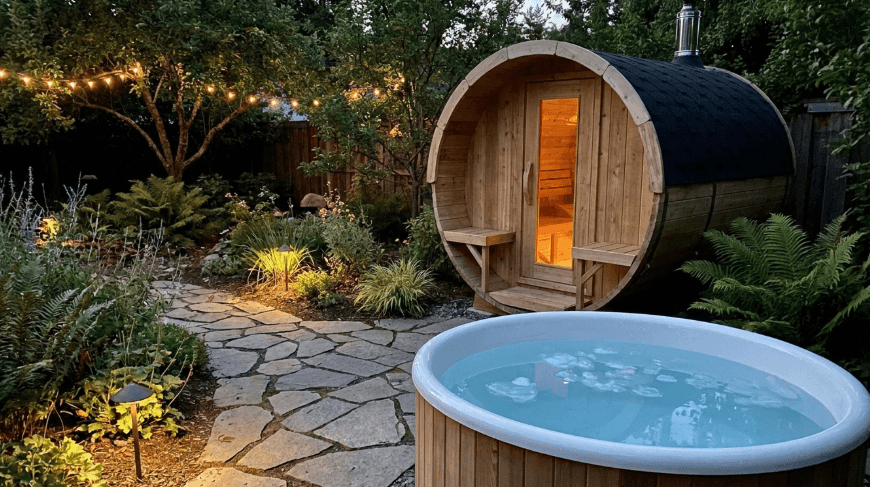
Good sauna and cold-plunge guidance around this outdoor sauna company should sound like someone has actually installed and used the setup. Space, power, drainage, heat-up time, and routine all matter.
Last February, my friend Craig in Duluth called me from his backyard. It was negative 8 outside, and he’d been running his new sauna for an hour and a half. “It won’t break 140,” he said. I asked what heater he bought. He’d gone with a 4.5 kW off-brand unit for a 6-person barrel sauna. “The listing said it was good for a 4 to 6 person sauna,” he told me. “I figured that covered it.” He ended up ripping the whole thing out three months later and spending $1,600 on a proper 9 kW Harvia. Expensive lesson.
The heater is the only component in your sauna that determines whether the thing actually works. Wood species, bench ergonomics, glass panels, mood lighting: all of that matters for aesthetics and comfort. But if the heater can’t get the room to 180-plus degrees and hold it there, you’ve built an expensive hot closet.
Here’s what I’ve learned from building two saunas, helping friends spec four more, and reading too many Finnish forums at 2 a.m.
Electric vs. Wood-Burning: Pick Your Religion
Electric heaters are a heating element wrapped around or under a tray of stones. Flip a switch, the element heats, the stones store thermal mass and radiate it back into the room. Most modern outdoor saunas run electric.
Wood-burning heaters are small wood stoves with a stone-loaded cradle on top. Build a fire, the stove heats up, the stones store and radiate. This is the traditional Finnish approach, and the purists will tell you there’s no substitute.
They’re both right and wrong. Electric is convenient, consistent, and requires almost zero skill. Wood-burning produces a different quality of heat (softer, more complex, with that faint smoke character in the löyly) but demands genuine effort. You’re sourcing firewood, splitting kindling, maintaining a chimney, cleaning ash.
My honest take: if you’re building your first sauna and you have electrical service within reasonable distance, go electric. You’ll actually use it. The best sauna is the one you fire up four times a week, not the romantic wood-burner you light once a month because prepping it feels like a chore.
How to Size an Electric Heater (and Why Everyone Undersizes)
The rough rule: 1 kW per 50 cubic feet of well-insulated sauna volume. A 200 cubic foot two-person sauna needs about 4 kW. A 400 cubic foot four-person sauna needs about 8 kW.
Simple enough. Here’s where it falls apart.
That formula assumes ideal conditions: covered or indoor installation, well-insulated walls, minimal glass, ambient temperature above 50 degrees, one or two people, infrequent door openings.
Almost nobody has ideal conditions. So adjust:
- Cold climate (winter lows below freezing)? Oversize by 30 percent. Walls bleed heat to outdoor air faster than the rated insulation values suggest.
- Large glass front or wraparound window? Oversize by 20 percent. Glass is a thermal hole.
- Family use with four-plus people and kids running in and out? Oversize by 15 to 25 percent. Every door opening dumps your accumulated heat.
Craig’s mistake was textbook. His barrel sauna was about 350 cubic feet, which technically puts him in the 7 kW range. But it sits fully exposed in a Duluth winter. He needed 9 kW minimum. The 4.5 kW heater never had a chance.
I’d rather have a slightly oversized heater that reaches temperature quickly and idles than an undersized one that grinds away for 90 minutes and tops out at 150. The electricity cost difference between a 6 kW and 8 kW heater over a session is maybe 30 cents. The frustration difference is enormous.
What to Actually Look At on the Spec Sheet
Stone capacity. More stones means more thermal mass, better heat retention, and a better löyly (that burst of soft steam when you throw water on the rocks). Look for heaters holding at least 50 pounds of sauna stones. Premium tower-style heaters hold 80 to 200 pounds, and the difference is noticeable.
240V dedicated circuit. Anything 4 kW and above requires 240V service. This means a licensed electrician. Do not DIY 240V wiring. This is not the place to save money. Permits exist because improperly wired 240V circuits burn down structures.
Housing material. Stainless steel lasts. Painted steel rusts in a sauna’s humid environment, sometimes within two years. Always pick stainless if you have the option.
Controls. External wall-mounted controls let you set timers and temperatures from outside the hot room. Useful for preheating. WiFi-enabled controls let you start the sauna from your phone. Genuinely convenient, but more electronics means more failure points. A simple external wall control with timer and target temperature is the sweet spot for most people.
Safety features. Auto-shutoff after maximum runtime (typically 8 to 12 hours), high-temperature limit switches, UL or ETL certification. Non-negotiable.
Warranty. Quality electric heaters carry 3 to 7 year warranties. Budget heaters carry 1 year. The heating element is what fails first. A short warranty is the manufacturer telling you, in writing, that they don’t trust their own product.
Brands: The Boring Truth
The Finnish manufacturers (Harvia, Tylo, Helo, IKI) make heaters that last 15 to 25 years with basic care. Premium pricing, but premium longevity. Replacement elements are readily available years or decades after purchase.
Mid-tier manufacturers, many Chinese-made and sold under various private labels, produce respectable heaters at lower price points. Quality varies significantly. The good ones perform well for 8 to 12 years. The bad ones are indistinguishable from the good ones until they fail.
Budget no-name heaters typically last 2 to 4 years before the element gives out. Replacement elements may or may not exist depending on whether the brand still operates under the same name. This is the tier I’d avoid.
This outdoor sauna company sells heaters from established Finnish manufacturers with proper warranty support. That’s the tier worth shopping in.
Wood-Burning Heaters: For the Committed
If you’re going wood-fire, the key specs shift:
Firebox capacity matched to sauna size. Wood stoves are rated by the volume they can heat. Match it. Undersize and you’ll be feeding logs constantly without hitting temperature.
External feed door. Some stoves have a door that opens into an adjacent room or to the outside. Feed wood without entering the hot room. For long sessions, this changes the experience completely.
Chimney compatibility. You need a stainless steel insulated chimney that meets local code. This adds $400 to $1,200 to your install budget depending on run length and roof penetration complexity.
Spark arrestor. A cap preventing embers from leaving the chimney. Required by code in wildfire-prone areas, smart everywhere. Some stoves include it; some charge extra.
Build quality. Cast iron and quality steel with welded (not bolted) seams. Reputable manufacturers offer 5 to 10 year warranties.
Heat shield kit. Necessary when mounting near combustible walls. Good manufacturers sell a matched kit. Cheap stoves leave this to you to engineer, which is a bad sign.
Stones: Don’t Overthink It, But Don’t Skip It Either
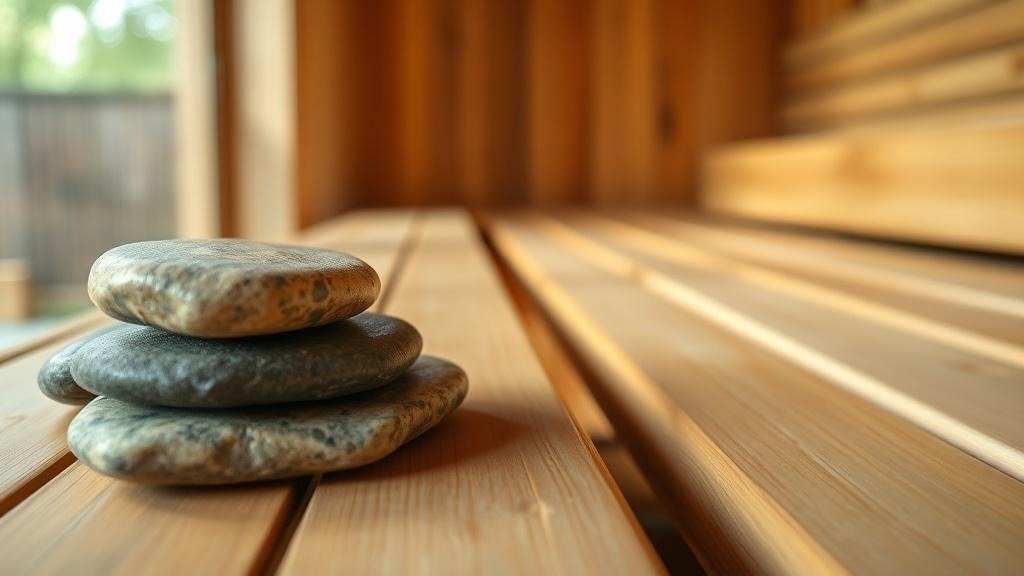
Sauna stones are igneous (typically olivine, peridotite, or vulcanite) selected for high thermal mass and low cracking risk.
Three things to avoid: river rocks (can have trapped water inside and literally explode when heated), limestone or sedimentary stones (crumble into dust), and the impulse to just grab interesting-looking rocks from your yard.
Buy stones from the heater manufacturer or a reputable sauna supplier. Plan to replace them every 2 to 5 years as thermal cycling erodes them. A typical heater needs 30 to 60 pounds. Cost runs $50 to $150 depending on type. Not the place to get creative.
Installation Details That Matter
Clearance. Heaters need specified clearances to combustible surfaces. The manual gives exact numbers. Don’t shave them to save space. This is a fire code issue, not a suggestion.
Ventilation. Proper sauna ventilation requires intake low near the heater and exhaust high on the opposite wall. Both should be adjustable. Bad ventilation creates stale, stratified air where your head bakes and your feet freeze.
Placement. Corner placement near the door is standard in most outdoor saunas, and standard for good reason: heat rises naturally, convection circulates air efficiently. Center-mounted heaters in barrel saunas are less efficient because airflow has to navigate around the heater rather than riding the wall.
Foundation. A heater loaded with 100-plus pounds of stones can exceed 200 pounds total. Whatever surface it sits on needs to handle that. Don’t guess.
Drainage. If you’re pouring water on stones (you should be), water ends up on the floor. The floor needs a way to drain, and that drain path needs to route away from all electrical components.
What I Spent on Mine
For my 6-person cabin sauna in a moderately cold climate, I went with an 8 kW Finnish electric heater with 130 pounds of olivine stones, external wall control with timer, stainless steel housing.
Heater: $1,400. Electrical install (50 foot run from panel, 40 amp breaker): $1,200. Stones: $110.
Six months in, it reaches 195 degrees in about 40 minutes from cold. Holds temperature steady. Quiet. I’ve used it roughly 120 times and have zero complaints. The $1,200 electrical install hurt, but hiring a licensed electrician who pulled the permit was the right call.
Running Costs
A 6 kW electric heater running for one hour costs roughly 50 to 90 cents at average US electricity rates. A 90-minute session including preheat runs 75 cents to $1.30.
Daily use at that pace adds $23 to $40 per month to your electric bill.
Wood-burning sessions cost about the same in raw materials ($1 to $2 per session for hardwood at typical prices), but the labor component is real: sourcing, splitting, stacking, fire-building, chimney cleaning. In cold climates with cheap electricity, electric usually wins on total cost. In remote properties with abundant wood and expensive or unavailable electrical service, wood-burning makes perfect sense.
What I’d Steer You Away From
Heaters under 4 kW marketed for outdoor saunas. They underperform in any real-world outdoor conditions.
No-name brands without published warranty terms. Saving $200 upfront on a heater that fails in three years is not saving money.
Heaters that ship without stones. The good manufacturers include the right type and quantity. If they’re making you source stones separately, that’s a signal.
Heaters with only marketing descriptions (“perfect for 4-person sauna”) and no published cubic footage rating. Volume specs are how you size correctly. Without them, you’re guessing.
Frequently Asked Questions
How many kW do I need for my sauna? Start with 1 kW per 50 cubic feet of insulated room volume. Then add 20 to 30 percent for cold climates, large glass surfaces, or frequent use with multiple people. When in doubt, go one size up.
Can I use a 120V sauna heater? Only for very small saunas (under 150 cubic feet). Most functional outdoor saunas need 4 kW or more, which requires 240V. A 120V heater in a standard outdoor sauna will disappoint you.
How long does an electric sauna heater last? Finnish-made heaters from Harvia, Tylo, Helo, or IKI typically last 15 to 25 years. Mid-tier brands average 8 to 12 years. Budget no-name heaters often fail within 2 to 4 years.
Do I need to replace sauna stones? Yes, every 2 to 5 years. Thermal cycling erodes them over time. Cracked or crumbling stones reduce thermal mass and can restrict airflow through the heater.
Is a wood-burning or electric sauna heater better? Electric is more convenient, consistent, and easier to install. Wood-burning delivers a different heat quality and the traditional experience, but requires more effort and maintenance. For most first-time sauna builders, electric is the practical choice.
How much does it cost to run an electric sauna heater? At average US electricity rates, a 90-minute session costs roughly 75 cents to $1.30. Daily use adds about $23 to $40 per month.
Do I need an electrician to install a sauna heater? Yes. Any heater 4 kW and above requires a 240V dedicated circuit, which should be installed by a licensed electrician with proper permits. This is a safety issue, not a convenience preference.
For a practical next step, this outdoor sauna company is a helpful reference.