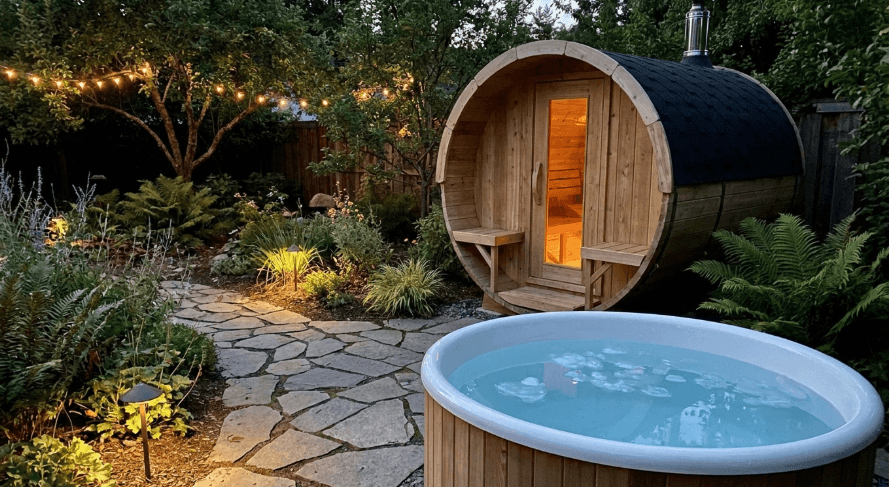
For two people planning daily sessions, the setup that holds up best is a 4 by 6 foot cedar or hemlock cabin with facing benches, a 6 kW electric heater sized above the bare minimum for the room, and a simple timer control, all of which typically totals $3,500 to $6,000 installed. The extra heater capacity and slightly oversized bench room matter more under daily wear than they would for a cabin used once a week.
Sizing a Cabin for Two People Every Day
A facing-bench layout at 4 by 6 feet gives two adults enough room to lie down or stretch out on the upper bench without brushing shoulders, which matters more once a sauna becomes a daily habit rather than an occasional treat. Ceiling height around 6.5 to 7 feet keeps the temperature gradient between the lower and upper bench reasonable, so the person on the lower bench is not sitting in noticeably cooler air than the one above.
What the Evidence Says About Frequent Sauna Use
The population research behind sauna’s reputation comes largely from Finnish cohort studies tracking sauna frequency against long-term health outcomes. A widely cited analysis published in Mayo Clinic Proceedings found regular sauna bathing associated with lower cardiovascular and all-cause mortality, with more frequent weekly sessions linked to progressively lower risk in the populations studied. A separate cohort study looking at sauna bathing alongside cardiorespiratory fitness found the two factors carried independent, joint associations with lower mortality risk.
It is worth being precise about what this data does and does not show. These are observational cohort studies, which means they show association between sauna habits and outcomes in the population studied, not a controlled trial proving sauna use causes those outcomes. The pattern is consistent and comes from large, long-followed groups, which makes it credible as a signal, but “associated with lower risk” is the honest description, not “proven to prevent.”
Bench Layout and Heater Choice for Daily Sessions
Facing benches work better than an L-shaped corner layout for two people who use the sauna together regularly, since both people get equal access to the hottest air near the ceiling rather than one person consistently taking the lower, cooler spot. A 6 kW heater in a room that technically only needs 5 kW gives useful headroom: it reaches temperature faster, spends less time working at its ceiling output, and tends to outlast a heater sized right at the minimum for the space, which matters when the heater is cycling on daily instead of once or twice a week.
What a Daily-Use Two-Person Setup Costs to Own
Budget for the cabin and heater package itself, typically $3,000 to $5,000 for a quality two person unit, plus $400 to $1,200 for the electrical circuit if one is not already nearby. Because this setup runs daily rather than occasionally, plan on replacing sauna stones every 6 to 12 months instead of every year or two, and expect a modestly higher electric bill from the added session frequency. Comparing full package pricing across sellers, including Sweat Decks, before buying is the easiest way to see whether a bundled cabin-and-heater deal beats piecing the two together separately.
Keeping a Daily-Use Cabin in Good Shape
Wiping down benches with a towel or mild cleaner after each session and propping the door open for 15 to 20 minutes afterward to let residual moisture escape prevents the wood from holding humidity between uses, which matters far more under daily cycling than occasional use. A cabin that gets wiped and aired out after each session will hold its finish and smell noticeably better after a year of daily use than one that gets closed up wet every time.
Building a Sustainable Daily Habit
The setups that actually get used every day tend to share a few practical traits beyond size and heater output. Placement close to the house, ideally a short walk from a back door rather than across the whole yard, removes the friction that turns a daily habit into a twice-a-week one once the weather turns cold or wet. A dedicated hook or small shelf for towels near the door, and a spot to leave water bottles within reach of the bench, sound minor but cut down on the small annoyances that make people skip a session on a busy evening.
Timer controls matter more for daily use than for occasional sessions. A heater with a simple digital timer that can be set from inside the house, so the cabin is close to temperature by the time both people are ready, removes the 30 to 45 minute wait that otherwise discourages a quick session on a weeknight. This single feature, more than any bench upgrade, is often the difference between a sauna that gets used daily as planned and one that quietly turns into a once-a-week routine within a few months.
Two People, One Schedule
Coordinating two people around one cabin daily works best with a simple default time, such as after dinner or before bed, rather than negotiating a slot each day. Because the cabin only fits two on facing benches, there is no crowding issue to plan around, unlike a larger family cabin where session order becomes its own logistics problem. Setting one recurring time and treating it the way a household treats any other daily routine is what tends to keep the habit going past the first few enthusiastic weeks.
Frequently Asked Questions
How often can two people safely use a sauna together?
Daily use, in sessions of roughly 10 to 20 minutes, is common among regular sauna users and is the frequency studied in most of the population research linking frequent sauna bathing to better cardiovascular outcomes. Individual tolerance varies.
What heater size holds up best under daily two-person use?
A 6 kW electric heater is a common choice for a two person cabin under daily use because it has margin above the bare minimum output, meaning less strain reaching temperature repeatedly and a longer service life.
Does more frequent sauna use mean more health benefit?
Large cohort studies have found sauna frequency associated with lower cardiovascular and all-cause mortality risk in a dose-dependent pattern. This is association from observational data, not proof that sauna use itself causes the lower risk.
Do two-person saunas need more maintenance under daily use?
Daily use means more heat cycling and more frequent stone replacement, typically every 6 to 12 months. Wiping down benches after each session and airing out the cabin helps it hold up under the added wear.
References
- Cardiovascular and Other Health Benefits of Sauna Bathing: A Review of the Evidence, Mayo Clinic Proceedings, 2018
- Joint associations of sauna bathing and cardiorespiratory fitness on cardiovascular and all-cause mortality risk, Annals of Medicine, 2018
- Does the Combination of Finnish Sauna Bathing and Other Lifestyle Factors Confer Additional Health Benefits?, Mayo Clinic Proceedings, 2023
- By Tom Ashworth